
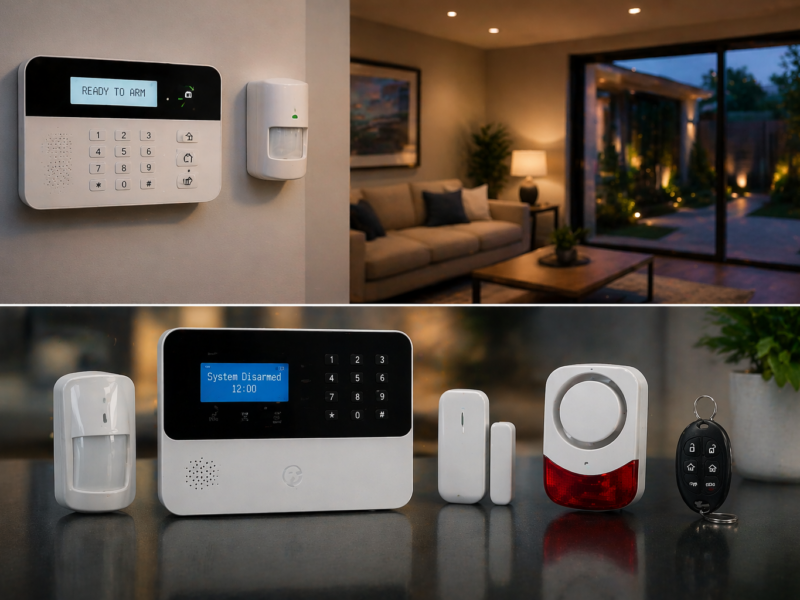
Retail security failures rarely result from a single weakness. They occur when multiple gaps align, exposed entry points, poor visibility, and delayed response systems.
In these situations, even established business security systems may not prevent loss. This is why retail businesses are reassessing not just what systems they have, but how those systems function in real-world scenarios.
What Are Reactive Business Security Systems?
Reactive business security systems are designed to respond only after an incident has begun or already occurred.
These typically include:
- Alarm systems triggered by intrusion
- Surveillance cameras used for recording incidents
- Monitoring services that alert authorities
These systems play an important role in documentation and response. However, they do not physically stop entry or prevent access in real time.
For retail businesses, this means that damage, theft, or unauthorized entry may already have occurred before any response begins.
What Are Preventive Business Security Systems?
Preventive business security systems are designed to reduce the likelihood of an incident occurring in the first place.
These systems focus on:
- Strengthening physical entry points
- Increasing visibility and natural surveillance
- Controlling access to vulnerable areas
Examples include:
- Window security film to resist forced glass entry
- Door and frame reinforcement systems
- Strategic lighting and layout improvements
These solutions follow Crime Prevention Through Environmental Design (CPTED) principles, which focus on making spaces less attractive and accessible to potential offenders.
Reactive vs Preventive Business Security Systems: Side-by-Side Comparison
| Factor | Reactive Systems | Preventive Systems |
|---|---|---|
| Timing | After the entry attempt | Before entry occurs |
| Function | Alerts and records | Deters and delays |
| Impact on Loss | Limits post-incident damage | Reduces the likelihood of incidents |
| Physical Protection | Minimal | High |
| Role in Retail | Monitoring | Risk reduction |
Retail environments benefit most when both systems are used together, but their roles are fundamentally different.
Why Retail Spaces Face Higher Security Risks
Retail businesses operate in open, high-traffic environments. This creates multiple exposure points.
Common risk factors include:
- Large glass storefronts
- Multiple entry and exit points
- Predictable operating hours
- High-value, visible inventory
These characteristics make retail spaces easier to observe and assess from the outside. In many cases, individuals can identify vulnerabilities without entering the premises.
Where Business Security Systems Fail in Retail Environments
Many retail businesses rely heavily on reactive systems while overlooking preventive measures.
Common gaps include:
- Glass doors and windows without reinforcement
- Weak door frames that fail under force
- Limited visibility in rear or side access points
- Over-reliance on cameras without physical deterrents
These gaps create opportunities for quick entry, often before alarms or commercial security systems can respond.
Businesses often assume that cameras alone are sufficient. In reality, they are most effective when paired with systems that slow or prevent entry.
The Role of Layered Business Security Systems in Retail Protection
An effective retail security strategy uses a layered approach, combining both preventive and reactive systems.
This includes:
- Physical reinforcement (doors, windows, entry points)
- Environmental design improvements (lighting, visibility)
- Monitoring and response systems (cameras, alarms)
Layered systems increase the time and effort required to gain access. This can discourage attempts and improve the effectiveness of response measures.
Businesses that adopt this approach align with proven crime prevention strategies used in commercial environments.
Why Prevention Should Lead Retail Security Strategy
Reactive systems remain important, but they should not be the primary line of defence.
Prevention-focused strategies:
- Reduce the likelihood of incidents
- Protect assets before damage occurs
- Support safer environments for staff and customers
Retail businesses that prioritize prevention are better positioned to manage risk consistently and measurably.
Security planning should begin with identifying vulnerabilities and strengthening them before relying on response systems.
Retail businesses can contact Panstrato Defense Systems to assess how current business security solutions perform and identify where preventive improvements can reduce risk.